

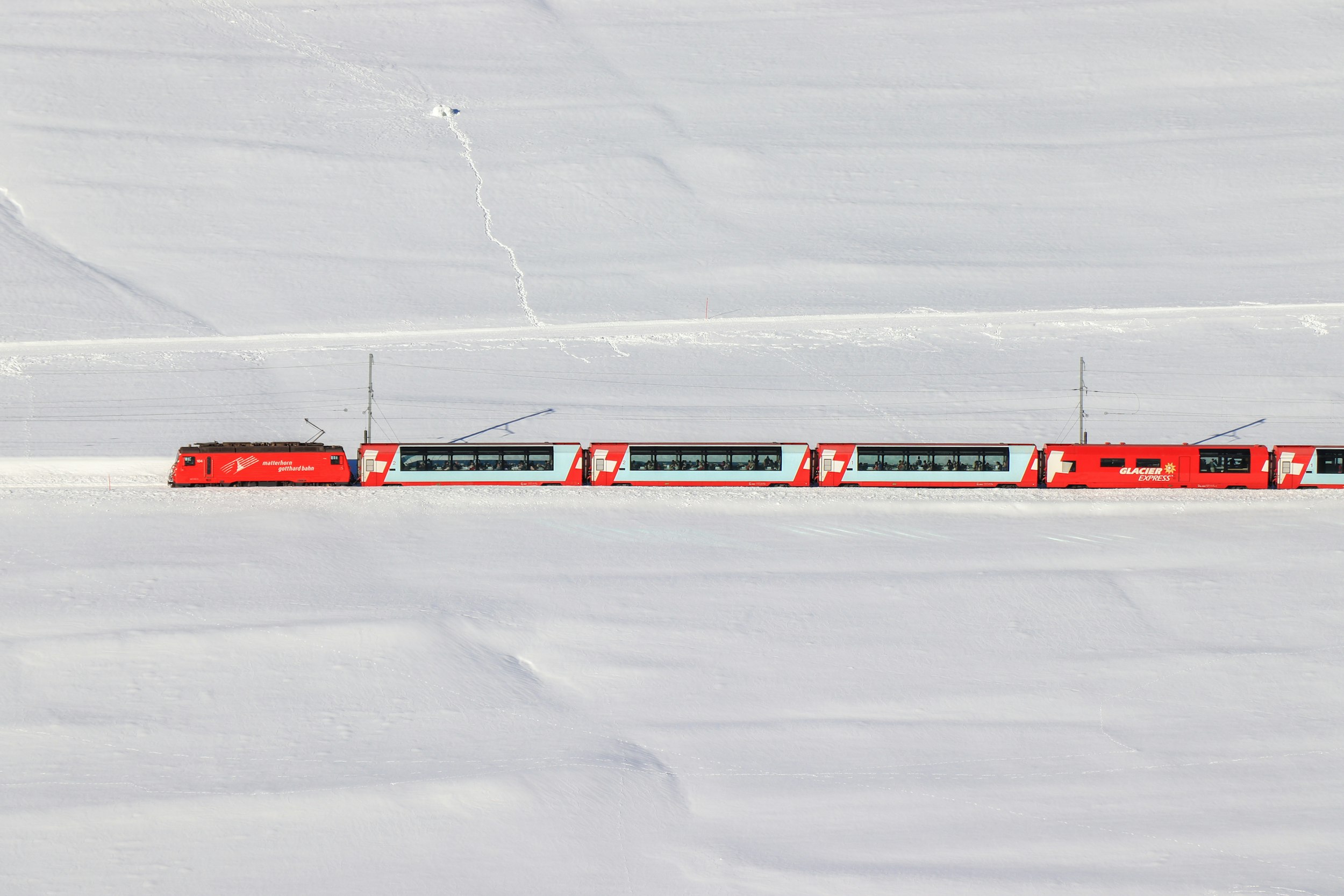
The Glacier Express Route


Which train to take on the Glacier Express route?
The local trains
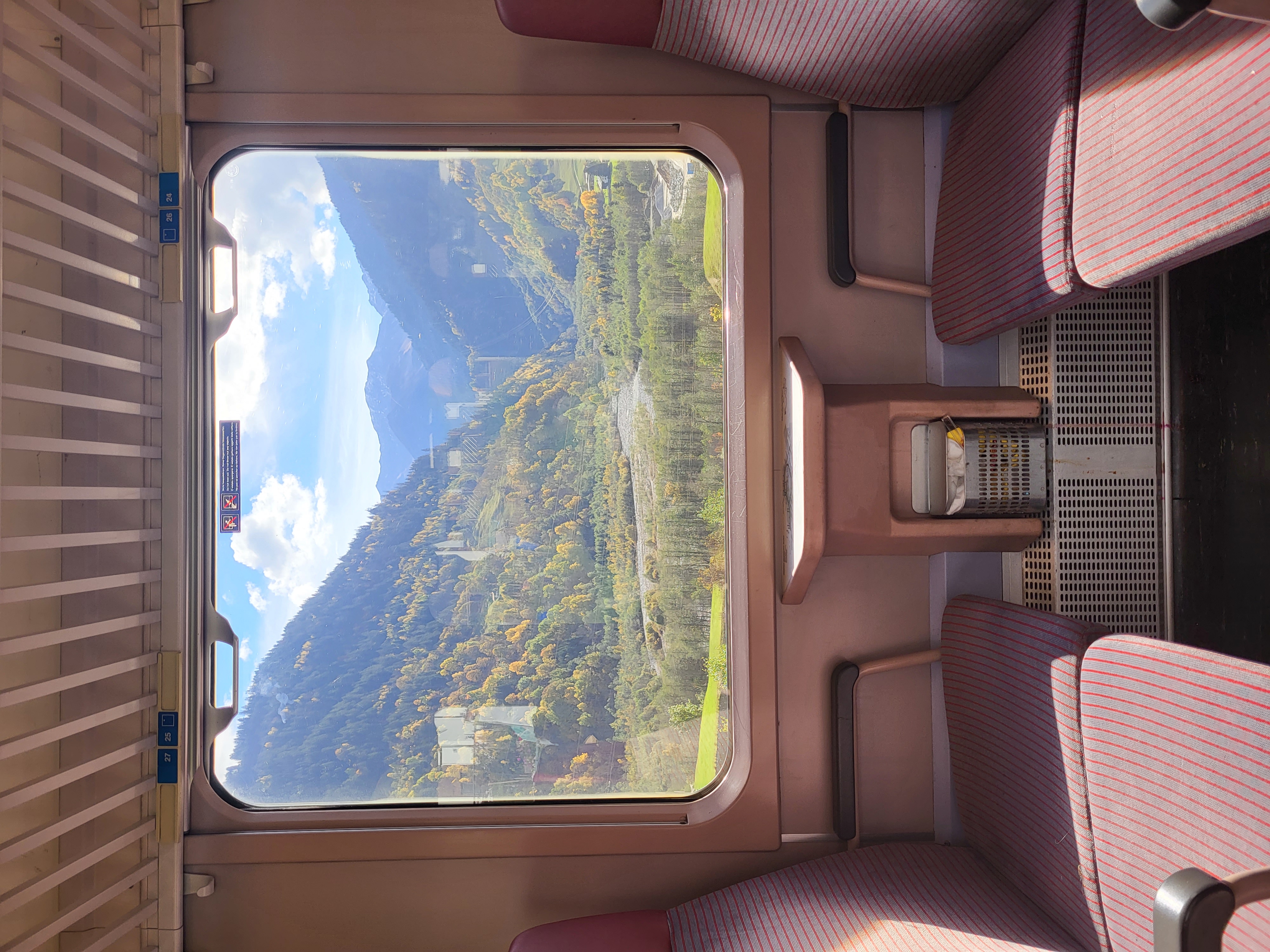
The local trains follow the exact same route as the Glacier Express, running year-round between St. Moritz and Zermatt with a series of well-timed connections.
- Regular regional services operate throughout the day and line up smoothly, despite requiring a few changes
- No seat reservations required and free with Interrail or Swiss Travel Passes
- Quieter carriages with unreserved seating, so you’re more likely to find seats together
- Allows you to stop at mountain passes, villages and viewpoints along the way
- The only option when the panoramic Glacier Express does not run in early winter
The panoramic service
Take the Glacier Express if you want a direct journey with panoramic windows and at-seat service.
- Designed specifically for visitors, with a premium feel and higher prices
- Seat reservations are mandatory in all classes, and passholders may not be seated together
- Limited stops and little flexibility if you want to break the journey
- Offers luxury upgrades such as Excellence Class, with guaranteed window seating and fine dining at a very high cost
- Does not usually operate from mid-October to early December

Journal
The Glacier Express route
Often called the slowest express train in the world, the Glacier Express travels one of Switzerland’s most spectacular rail routes between St. Moritz and Zermatt. Alongside the famous panoramic service, a network of more flexible local trains follows the same tracks. Read our guide to learn more about the route, the different trains you can take, and the places you can explore along the way.
To find out why we love local trains, read our blog all about why they're the backbone of regional rail networks and can offer a better travel experience.
Read about the Glacier Express routeTransport
Customisable, beautiful routes across Europe by land and sea
Accommodation
Chosen by you, booked by us, favouring local stays
Support
Personalised trip guide, 24/7 in-trip support, free disruption replanning