
The Bergen Railway


Kabelleger / David Gubler
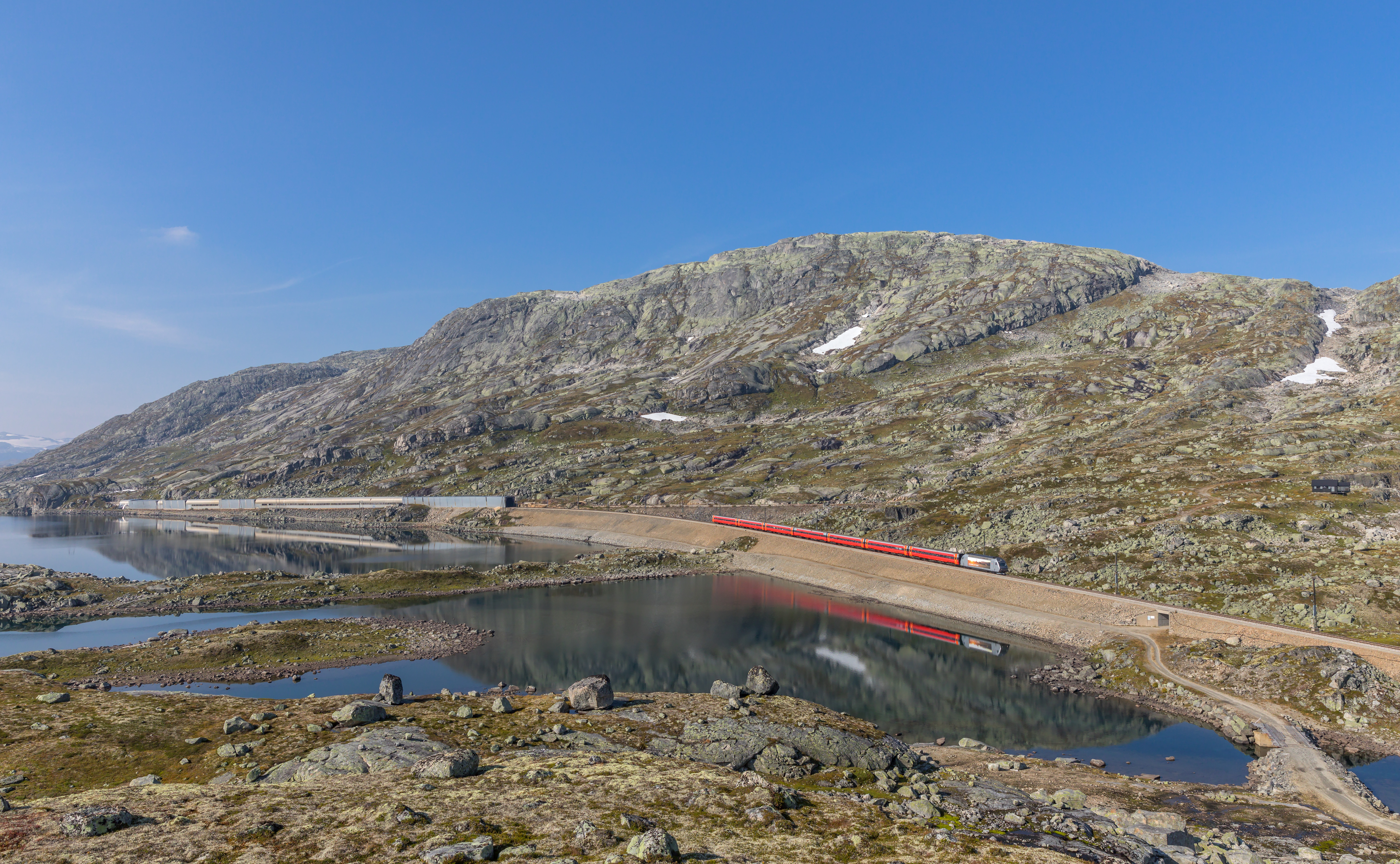
Travelling along the Bergen Railway, also known as the Bergen Line or Bergensbanen in Norwegian, is one of the most unique rail experiences in Europe. It's not just the altitude that makes it so special (the line is the highest in Northern Europe), it’s also the variety of landscapes it travels through, from dense forests to alpine plateaus, coastal cities to windswept fjord country. From the window, you might spot Arctic fauna, such as Arctic foxes, snow owls or the largest wild reindeer herd in Europe.
Opened in 1909 and electrified in the 1960s, the single-track railway line cuts through 182 tunnels, passing through mountains and traversing icy plains. More than a century later, the Bergen Railway still feels like an engineering triumph. But now, it's also one of the most scenic and sustainable ways to cross Norway from east to west. Read on to find out about the Bergen Railway: what to expect on the train and where to visit along the way.
For more exclusive insights into train routes, slow travel inspiration and insider tips, subscribe to our newsletter.


ChrisO
The Bergen Railway train
The Bergen Railway is operated by Vy, Norway’s state-owned rail company. The full route runs between Oslo Central Station and Bergen Station, covering 471 km in around 7 hours. Vy runs four to five daily direct trains, plus a sleeper train Sunday to Friday (a practical option, but it does mean missing out on all that Nordic scenery).
Onboard facilities
The Bergen Railway offers modern, comfortable trains equipped with convenient facilities. Here's what you can expect onboard:
Free Wi-Fi (can be patchy in the highlands and tunnels)
Power sockets at most seats
Café carriage with hot and cold meals, vegan and vegetarian options, sandwiches, pastries, and drinks
Luggage racks at carriage ends
Premium class features: fold-down tables, adjustable lighting, and quiet zones
Family-friendly carriage with a playroom
Tickets and flexibility
Ticket costs vary based on how early you book, with prices starting from 249 NOK (£28) each way. Interrail passes are valid on the Bergen Railway, but a seat reservation is compulsory for Interrail holders, which costs around 100 NOK (£7.50).
While flexible tickets are available, the Bergen Railway does not offer a "hop-on-hop-off" option. However, you can explore stops or stay overnight along the route using separate tickets or reservations.
With your ticket, you can purchase an audio guide from VY for the journey, offering stories, local folklore, historical insights, and information on the landmarks you’ll see from the train window.


Kevin Charit
Stops on the Bergen Railway
Oslo to Drammen
As the Bergen Railway train departs Oslo Central Station, a modern glass-and-steel hub, the urban cityscape fades, and you’re treated to views of Oslofjord on one side. The scenery transitions to greenery and lakes as the train heads west into Greater Oslo. From Drammen, the landscape expands into wide valleys, followed by views of Tyrifjorden, Norway’s fifth-largest lake, and mountains like Norefjell and Krøderfjorden.
Hønefoss
The first major stop, Hønefoss, marks the entrance to the Hallingdal Valley, a region characterised by rugged and rural terrain. This town serves as a transport hub but offers a great opportunity to explore the valley. Beyond this point, pine forests begin to dominate and the Bergen Railway route rises in altitude.


Trond Sjemmedal
Halingdal river.
Flå
Flå is a notable stop on the Bergen Railway for families and wildlife lovers. It’s home to Bjørneparken (Bear park), a wildlife park where you can see bears, amur leopards, lynx and wolves. It’s just 2 km from the station and open year-round.
Gol
For active travellers, Gol is perfect. In winter, it offers quick access to snowshoeing and cross-country skiing trails. Summer visitors can rent mountain bikes and enjoy hiking Veikulnatten, it takes around three hours and on a clear day, you can see Hallingskarvet, the Hemsedal Mountains, and Jotunheimen. History lovers will enjoy the Gol Stave Church (Stavekirke Gol), a replica of a 13th-century church, and the Gol Bygdemuseum, an open-air museum showcasing traditional Norwegian life with houses from the late 1600s to early 1800s.


Peulle
Gol Stave Church.
Ål
Ål is another great stop for families. From the train station, head to Hallingdal Feriepark, a family campsite offering activities like a zipline, climbing park, adventure golf, and a giant trampoline. There’s also an indoor play area, in case the weather turns.
Geilo
Geilo is a standout halfway destination. It’s one of Norway’s oldest ski villages, and in winter, you can enjoy dog sledding, ice bathing, and skiing. In summer, explore the mountains on horseback, go glacier hiking, or bike along alpine trails. Don’t miss the Vestlia chairlift to the top of Bjødnahovda, which offers views over Hardangervidda National Park. 1.5 km from the station, you'll find Hakkesetstølen, a mountain lodge with a café.


Elwin de Witte
Hardangervidda.
Ustaoset and Haugastøl
As the Bergen Railway climbs higher, the trees thin and the landscape shifts to exposed tundra and snow-covered plains. Ustaoset and Haugastøl are small mountain stations, popular with hikers, cyclists, and cross-country skiers heading into the wilderness. At Haugastøl, the Rallarvegen cycle route begins and runs to Flåm, following the maintenance road used during the railway’s construction.
Finse
Accessible only by train, foot, or ski, Finse is the highest station on the Norwegian railway network (1,222 meters above sea level). Finse 1222 is a historic hotel once used by polar explorers with views of the Hardangerjøkulen Glacier, which you can hike to in under two hours. On a winter visit, try snowkiting on the plateau’s frozen lakes.


Sindre Bøyum
Finse train station.
Myrdal and the Flåm Railway
After Finse, the train descends fast, tunnelling through rock and clinging to the mountain as it drops toward the fjords. At Myrdal, you can switch to the Flåm Railway (Flåmsbana), a 20 km branch line to the Aurlandsfjord village of Flåm. It’s a dramatic 60 minute ride along one of steepest normal-gauge lines in the world, with views of mountain farms clinging to the slopes, deep gorges, tall peaks and mighty waterfalls, like the Kjosfossen.


Yogendra Negi
Flåm from the Flåm Railway train.
Voss
As the train enters the Voss Valley, you’ll notice a change in the landscape as it starts to soften. Known as Norway’s adventure capital, Voss offers a wide range of activities, from white-water rafting to paragliding, and access to two ski resorts (Myrkdalen Fjellandsby and Voss Resort). From the station, you can walk to the Voss Gondol, a cable car that climbs to Mount Hanguren in under 10 minutes. At the top, there are mountain biking trails and the glass-walled Hangurstoppen restaurant that offers panoramic views, a large outdoor area and dishes made with local ingredients.


Solar/ShahMai Network
Voss in winter.
Bergen
Beyond Voss, the Bergen Railway snakes along steep fjord walls and enters long tunnels before the journey ends at Bergen Station, a stone-built terminus from 1913. From here, it’s a short walk to the UNESCO World Heritage site Bryggen, a historic harbour area, or a tram ride to the base of the Fløibanen funicular, which offers vistas of Bergen and the North Sea.


MAO YUQING
Bergen.
Travel along the Bergen Line on this break to Bergen, or check out more slow travel trips to Norway by train.
Short on time? Combine the Bergen Line and Flåm Railway from Bergen as one of our bite-sized excursions.
Read more about the art of slow travel, why we love taking the local train, and six of the most scenic train trips in Europe.